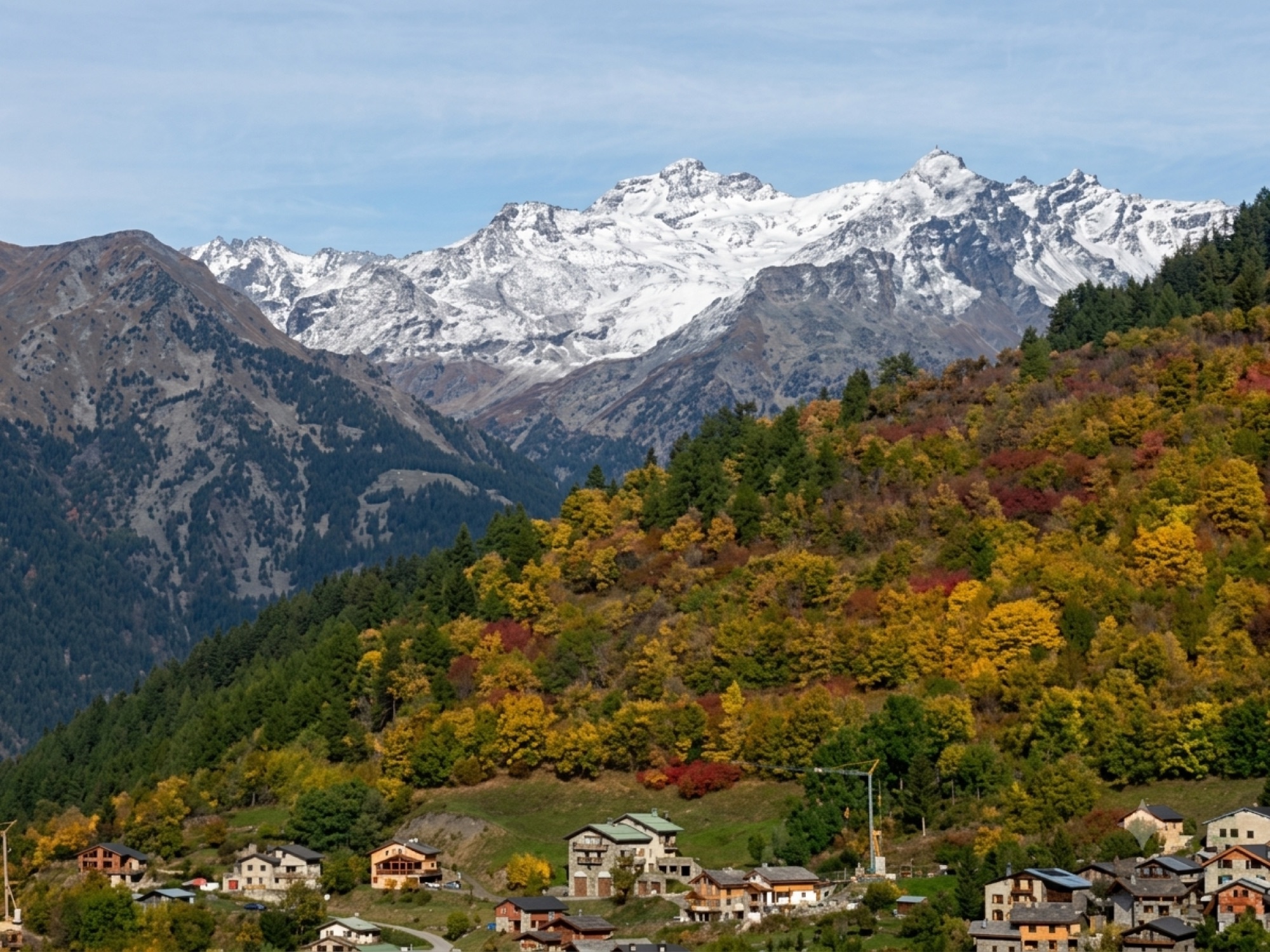
Mention Valmeinier to most people and they picture snow-covered pistes, chairlifts humming above the treeline and long, bright days on the slopes. And yet there is another Valmeinier, quieter and every bit as beautiful: the one that appears in summer. As soon as the snow retreats from the alpine pastures — the high summer grazing meadows the French call alpages, where herds are driven up in June and stay until September — the whole valley turns into an enormous playground for anyone who loves the mountains. The meadows fill with wildflowers, meltwater torrents come crashing down the hillsides, marmots reclaim their scree slopes, and the summits, stripped of their winter coat, draw a skyline that genuinely stops you in your tracks. If you are looking for summer mountain holidays in Savoie that feel authentic rather than packaged, well away from the coach parties and the queues, you have come to the right valley. For context if you have never been: Valmeinier sits in the Maurienne, one of the longest valleys in the French Alps, in the Savoie département, and it is split across two levels — Valmeinier 1500, the older and more village-like base, and Valmeinier 1800 higher up. Here is our complete guide to discovering Valmeinier in summer in all its glory, written from our Savoyard chalet in the hamlet of la Torrélière.
Why choose Valmeinier for the summer
Summer in the French Alps has a particular magic to it, and Valmeinier concentrates every one of its advantages. The first, and by no means the least, is the peace and quiet. Where the big-name alpine resorts see wave after wave of summer visitors pour in, Valmeinier keeps a calm, almost confidential atmosphere. The paths are not congested, you never have to fight for a table on a sunny terrace, and you rediscover that increasingly rare feeling of having the mountains more or less to yourself. For British and Irish visitors used to the crowds on Snowdon or the Lakeland fells in August, the contrast is striking.
The second compelling argument is the gentle pricing. Renting a chalet or an apartment costs noticeably less in summer than it does at the height of the ski season — often a fraction of the January or February rate for exactly the same property. For a modest budget you still get a setting that is every bit as spectacular, with the added benefit of being able to head out, walk and breathe without worrying about winter road conditions, snow chains or lift passes.
Finally, there is the nature, which is everywhere and endlessly generous. At this altitude the air is sharp and clean, the days are long and luminous — light until well past 9pm in midsummer — and the landscape shifts noticeably from one week to the next: wild daffodils at the start of the season, rhododendrons flaming pink across the slopes, then bilberries ripe for picking as the summer winds down. It is a standing invitation to slow right down and savour the place at its own pace.
Hiking in Valmeinier: a pleasure for every level
It is impossible to talk about summer here without coming to the undisputed king of activities: walking. Hiking in Valmeinier is well known for the sheer variety of its routes. From the hamlet of la Torrélière and Valmeinier 1500 you step straight onto a network of paths that climb towards the alpine pastures, follow the torrents and lead all the way up to the high-altitude lakes. Whatever you fancy and however your legs feel on the day, there is always a walk cut to your measure. A note on the signage, which is refreshingly clear once you know the code: routes marked GR (grande randonnée, waymarked red-and-white) are long-distance trails, while PR (promenade et randonnée, waymarked yellow) are shorter local loops. Signposts give walking times rather than distances, and dénivelé — the figure you will see quoted everywhere — simply means total ascent in metres, which in the Alps tells you far more about the effort involved than the horizontal distance ever will.
Family walks
For those travelling with young children, or who simply prefer a gentle outing, the valley is full of easy strolls. These are paths that are almost flat or rise very gradually, following the streams, crossing flower-filled meadows and letting you watch the herds grazing up on the pastures. These family walks usually take one to two hours: enough to keep everyone happy, spread a picnic out beside the water and get home without anyone being carried the last kilometre. They are also the perfect opportunity to introduce little ones to the mountains, to teach them to recognise a gentian from an anemone, or to spot a marmot before it whistles its warning and vanishes into the rocks.
Full-day hikes
Regular walkers will gravitate towards the full-day outings, which ask more of you but repay it many times over. These routes generally lead towards a memorable objective: a high-altitude lake with astonishingly clear water, a perched mountain refuge where you can stop for a hearty lunch, or a col — a mountain pass — that opens up a sweeping panorama over the valley. A word on refuges, since they have no exact British equivalent: they are staffed mountain huts, often reachable only on foot, serving simple hot food and offering dormitory beds to walkers who want to break a long route over two days. Allow five to six hours of walking, with an amount of ascent that will certainly test your calves but whose visual payoff justifies every step. Carry plenty of water, something to eat and protection against both the sun and a sudden change in the weather.
Serious mountain routes
Finally, seasoned hikers will find plenty here to push themselves. The ridges and summits rising towards the 3,000-metre mark — Mont Thabor, the great landmark peak of the area, sits just beyond that threshold — offer demanding days out, with long ascents and occasionally technical passages over rock and old snowfields. These outings call for genuine fitness, proper equipment and a careful reading of the forecast. But what a spectacle once you are up there: a sea of summits stretching to the horizon, the mineral silence of the high mountains, and that unmistakable sense of standing on the roof of the world. For routes of this kind, going out with a qualified mountain guide or an accompagnateur en montagne (a certified hiking leader) is strongly recommended if you do not already know the area well.
The great cycling cols and the spirit of the Tour de France
Valmeinier occupies a dream position for cyclists. The valley makes an ideal base camp for taking on some of the most legendary climbs in the Alps. Col du Galibier cycling is without doubt the most famous of them: this giant, a name that echoes through more than a century of cycling history, tops out beyond 2,600 metres and rewards climbers with a genuinely legendary panorama. Just below it, the Col du Télégraphe is a demanding, technical ascent, very often linked straight onto the Galibier during the great mountain stages — the classic combination that has decided more than one general classification.
Every summer these roads draw enthusiasts from all over Europe, come to ride in the wheel tracks of the Tour de France champions. Cranking your way over these passes on nothing but leg power, in the silence of first light or under the full midday sun, produces an emotion all of its own. You picture the riders, the roaring crowds packed onto the hairpins, the heroic effort on those final ramps where the gradient bites hardest. Whether you are a seasoned cyclist chasing a serious challenge or a keen amateur who simply wants a taste of the atmosphere, the region lends itself beautifully to this two-wheeled pilgrimage. Set off early, drink far more than you think you need, and pack a windproof jacket: at the top of the cols the temperature drops fast, even in the middle of August, and the descent is long and cold.
Mountain biking and outdoor activities
Cycling in Valmeinier is not confined to the tarmac. The resort and its surroundings offer excellent terrain for mountain biking, with trails and marked itineraries for every level. Families will appreciate the flowing tracks that wind between the alpine pastures, while riders after a bigger hit of adrenaline will find more technical descents to get their teeth into. Electric mountain bikes, increasingly widespread and available to hire locally, mean anyone can get up the climbs without emptying the tank and make the most of these wide open spaces.
Beyond cycling, summer in Valmeinier comes in a whole range of outdoor activities:
- Nordic walking, for those who want to combine a proper workout with real discovery;
- climbing and via ferrata on the rock faces of the valley — a via ferrata being a protected route fitted with steel cables, rungs and ladders, so no climbing experience is needed;
- paragliding, to take in the mountains from the air on a tandem flight;
- nature games and adventure trails designed with children in mind.
The resort of Valmeinier also runs its own programme of summer events and maintains dedicated facilities for outdoor activities: ask at the tourist office when you arrive to find out what is on during your stay, as the schedule varies from one week to the next.
Nature, wildlife, flora and fishing
One of the great joys of a high-altitude summer is the sheer richness of the surrounding natural world. Mountain wildlife will show itself readily enough with a little patience and discretion: marmots whistling their alarm as a walker approaches, chamois and ibex picking their way across the steepest slopes, golden eagles wheeling overhead on the thermals. Dawn and dusk are by far the best moments for these encounters, when the animals come out to feed and the light is at its most beautiful.
The flora is no less remarkable. The alpine pastures put on a carpet of colour: blue gentians, anemones, golden arnica, blazing rhododendrons. Every week brings a new wave of flowering, and amateur botanists are in their element. These same meadows are what give the local Beaufort cheese its reputation — the summer milk from cows grazing on this flowering pasture produces the prized Beaufort d’alpage, well worth seeking out at a market. Towards the end of summer, picking bilberries becomes a small and delicious ritual, provided you respect the land and take only what you need.
For those keen on fishing, the high-altitude lakes and the torrents of the valley offer some fine opportunities. The brown trout rules these fast, cold waters, and a morning spent at the water’s edge, rod in hand, delivers a sense of contentment that is hard to match anywhere else. Remember to buy the compulsory fishing permit (carte de pêche), available online or from local outlets, and to check which stretches of water are open and what the season dates are.
Local life, relaxation and good company
A summer stay in Valmeinier is not only about physical effort: it is also about the pleasure of unwinding and dipping into local life. After a day on the hill, there is nothing better than wandering through the resort, settling onto a sunny terrace or tucking into Savoyard specialities in a friendly restaurant. The local markets overflow with regional produce: alpine cheeses, cured hams and sausages, mountain honeys and small-batch jams — treasures to carry back to the chalet and lay out on the table.
The mountains in summer are also an invitation to slow down: reading in the sun on a balcony, playing cards as a family, watching the sunset paint the summits pink and orange. It is that unhurried rhythm, far from screens and traffic jams, that people really come here to find. And for getting about the resort, it is worth knowing that Valmeinier runs a free shuttle bus, genuinely useful for reaching the various trailheads without having to get the car out again.
What to do in Valmeinier when it rains
The mountains occasionally serve up a grey day, and that is entirely normal — indeed a summer afternoon thunderstorm is a classic feature of the alpine climate. A shower should not spoil your holiday: there are countless ways to enjoy a wet day. It is the ideal moment to:
- visit the surrounding villages and explore the Savoyard heritage, its baroque chapels, communal bread ovens and old slate-roofed farms;
- treat yourself to a wellness break, in a spa area or simply curled up with a good book beside the stove;
- cook as a family — a homemade raclette or tartiflette is a real treat even in summer, and the local supermarkets stock everything you need;
- explore the museums and cultural sites of the neighbouring Maurienne valleys, including fortresses, hydroelectric heritage and Roman remains.
A rainy day, well spent, often turns into one of the best memories of the whole trip: the one where everybody ends up together, sheltered inside the chalet.
Kit advice for hiking
To get the most out of hiking in Valmeinier, a minimum of preparation is essential. Here are our key recommendations:
- proper walking boots, above the ankle with a deep-lugged sole, for ankle support and grip on loose rock;
- layered clothing, because the temperature swings dramatically between the valley floor and the summits — reckon on roughly 6°C lost for every 1,000 metres of ascent;
- a windproof or waterproof jacket, which is indispensable even when the forecast looks perfect;
- plenty of water and an energy-rich snack, as refill points are rare once you leave the pastures;
- full sun protection: hat, sunglasses and high-factor cream, since altitude sharply intensifies UV radiation;
- a map or a hiking app, and ideally a GPS track of your route downloaded for offline use, as mobile signal is patchy in the side valleys.
Always check the forecast before setting out, tell someone where you are heading, and match the route to your genuine level rather than your ambitions. The mountains have to be earned and respected: well prepared, you will get the very best out of them.
Frequently asked questions
When is the best time to visit Valmeinier in summer?
The summer season generally runs from mid-June to mid-September. July and August offer the most flower-filled alpine pastures and the fullest programme of events, while June and September win people over with their calm and their even gentler prices. Bear in mind that lingering snow can block the highest routes into early July. Each period has its own charm.
Do I need to be an experienced hiker to come to Valmeinier?
Absolutely not. The valley offers walks for every level, from almost flat family strolls along the streams to serious summit ascents. Everyone finds a route suited to their fitness and their appetite for effort, and the local tourist office can point you towards the ones that fit your group.
Is cycling here only for experienced riders?
No. While the Col du Galibier and the Col du Télégraphe are aimed at seasoned climbers, electric mountain bikes and the gentler rolling tracks mean that everyone, families included, can discover the mountains on two wheels at their own pace.
What can we do if it rains during our stay?
There are plenty of options: visiting the villages, a wellness session, cooking together as a family, or discovering the cultural sites of the Maurienne. A rainy day turns very easily into a pleasant, cosy interlude — and the weather in the Alps often clears as quickly as it arrived.
Your chalet for an unforgettable summer
To experience summer in the French Alps to the full, treat yourself to the comfort of a genuine Savoyard chalet. Tucked away in the peaceful hamlet of la Torrélière, at Valmeinier 1500, Chalet Cristal welcomes you into an authentic and warm-hearted setting. Sleeping up to 12 guests across 145 m², four bedrooms and a bunk room — with two shower rooms and, by design, more beds than the twelve guests advertised, so that nobody is cramped — it wins people over with its balcony and its uninterrupted mountain views, perfect for watching the sun come up over the ridgelines before a day on the trails with the whole party. The hiking paths are accessible directly from the hamlet, with no need to drive anywhere first, and rental rates are far gentler than in winter. After the effort, gather round the big table for a convivial meal in a chalet designed from the outset for relaxation. Book your stay at Chalet Cristal now and experience a Savoyard summer in a way you never imagined.